
At Rise Up Inspections, our goal is simple: help you clearly understand the condition of a home so you can move forward with confidence.
Every inspection combines professional home inspection standards with real construction and renovation experience. Rather than simply listing issues, we focus on helping you understand what truly matters, how systems work together, and what the findings mean for the property moving forward.
Whether you’re buying, selling, or evaluating a property, our approach emphasizes clarity, practical insight, and honest communication.
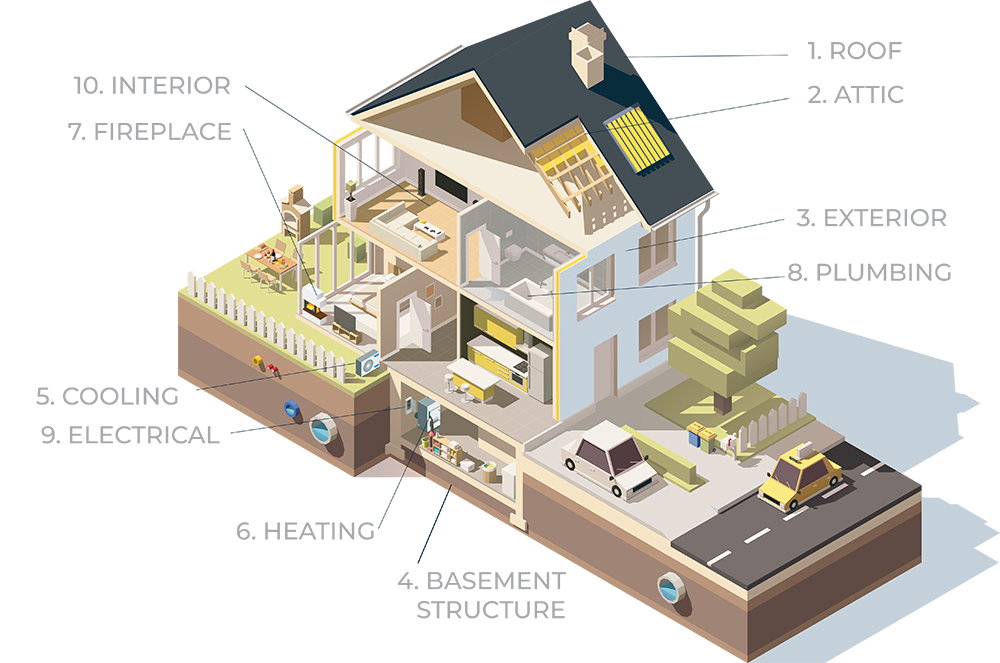
Foundations, grading & drainage, basements, walkways, and floor, wall and ceiling structures.
Roof coverings, drainage systems, flashings and skylights, chimneys and other roof penetrations.
Service entrance and panels, branch circuits, connected devices and fixtures, smoke and carbon monoxide detectors, and making sure your outlets are GFCI-protected.
Fixtures and faucets, water supply systems, drain, waste and vent systems, water heater, vents, and any sump pumps or fuel storage and distribution systems.
Heating and cooling equipment, ducts, vents and flues.
Dishwasher, garbage disposal, range hood, range or oven, cooktop, microwave, trash compactor, bathroom exhaust fans, garage door operator, and other built-in appliances.
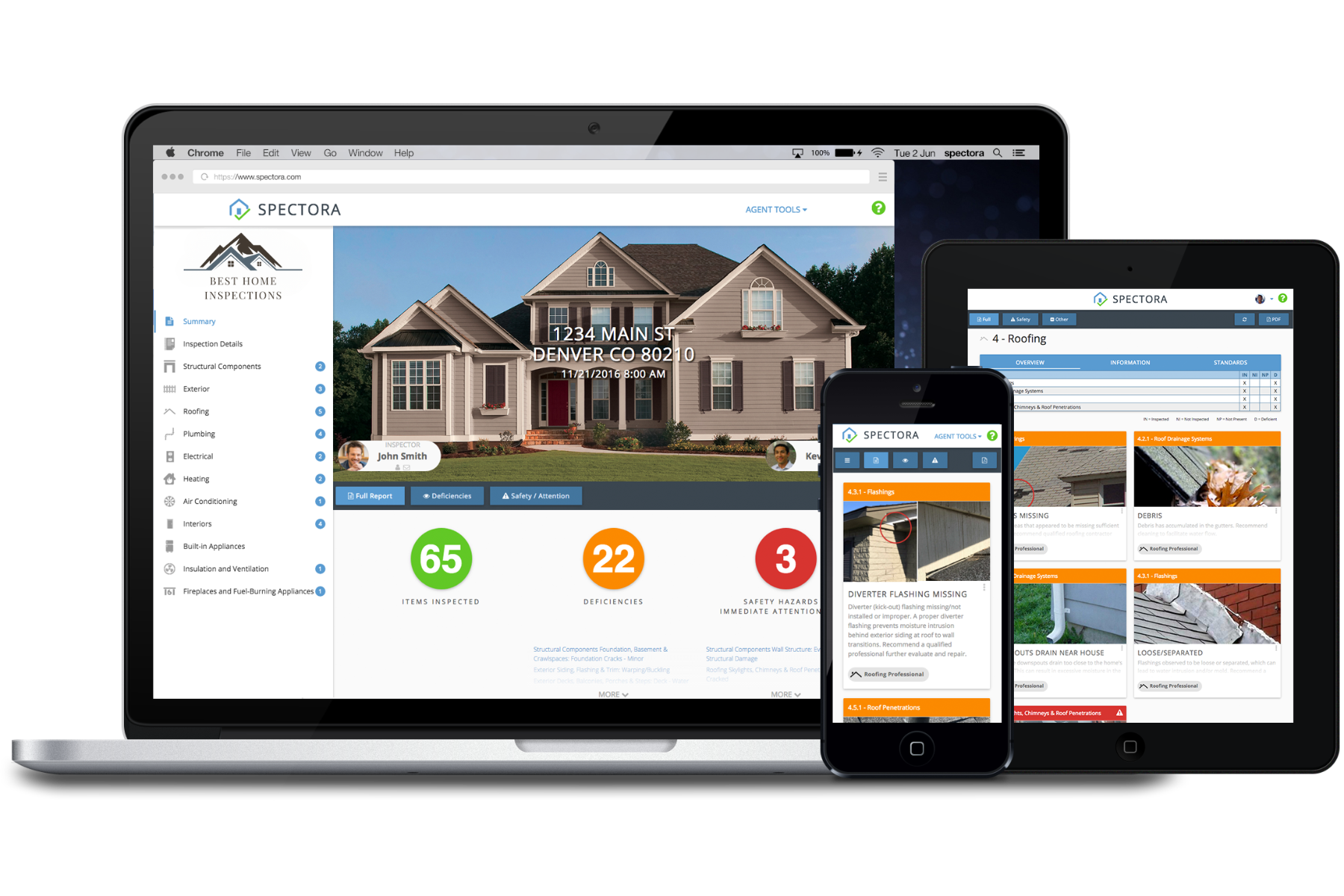
After your inspection, you will receive a detailed digital report through Spectora, delivered promptly and designed to be easy to navigate.
Our goal is not simply to document issues, but to help you understand the home and what it means for you moving forward.
Buying or selling a home can be a stressful experience, but we’re here to ensure you know what to expect during your home inspection.
A home inspection includes checking for any structural issues such as foundation cracks, roof leaks, plumbing issues, electrical wiring, heating/cooling systems, insulation, windows, doors, chimneys, etc. Depending on how big the property is, a home inspection typically takes 2-3 hours.
Ensure all inspection points are free from clutter, including any closets that might lead to a crawlspace or attic, and clearing some space around your home’s perimeter. It’s also important to check the functionality of all built-in appliances, electric, and gas. If you don’t plan to attend the inspection, make sure your inspector has access to the home, and all pets are properly contained or moved.
A home doesn’t pass or fail an inspection. Instead, a home inspection is a thorough audit of your home’s components. In most cases, there will be concerns marked on your home inspection report, but these are strictly informative.
While you can legally skip a home inspection in many cases, doing so could mean you may end up buying a home that has major issues that need to be fixed.
While a home inspector may recommend some minor repairs, they are not qualified to make major repairs. He or she can provide information about what needs to be repaired — and it might be helpful to know that information — but the decision to actually do the work lies solely with the homeowner. Not only does this give you the freedom to choose your contractors, but it also helps prevent a conflict of interest.
A home inspection can affect appraisals for two reasons: 1) The inspector may find something wrong with the property that would lower the value of the home, 2) The inspector may find things that need repair which could increase the value of the home. If the inspection finds issues that require repairs, then the seller has to decide whether they want to fix them themselves, or hire someone else to do it. If the buyer wants to purchase the home, he/she must be willing to pay for those repairs.
Leave your details below and we will get back to you ASAP!